If you have ever received a bulk lot of aluminium pipes that looked fine on the invoice but turned out to be the wrong wall thickness, you already know how expensive a small detail can get. The pipes get cut, the welds get laid, and only then does someone notice the problem. By then, the material is on your shop floor and the delivery schedule is already slipping.
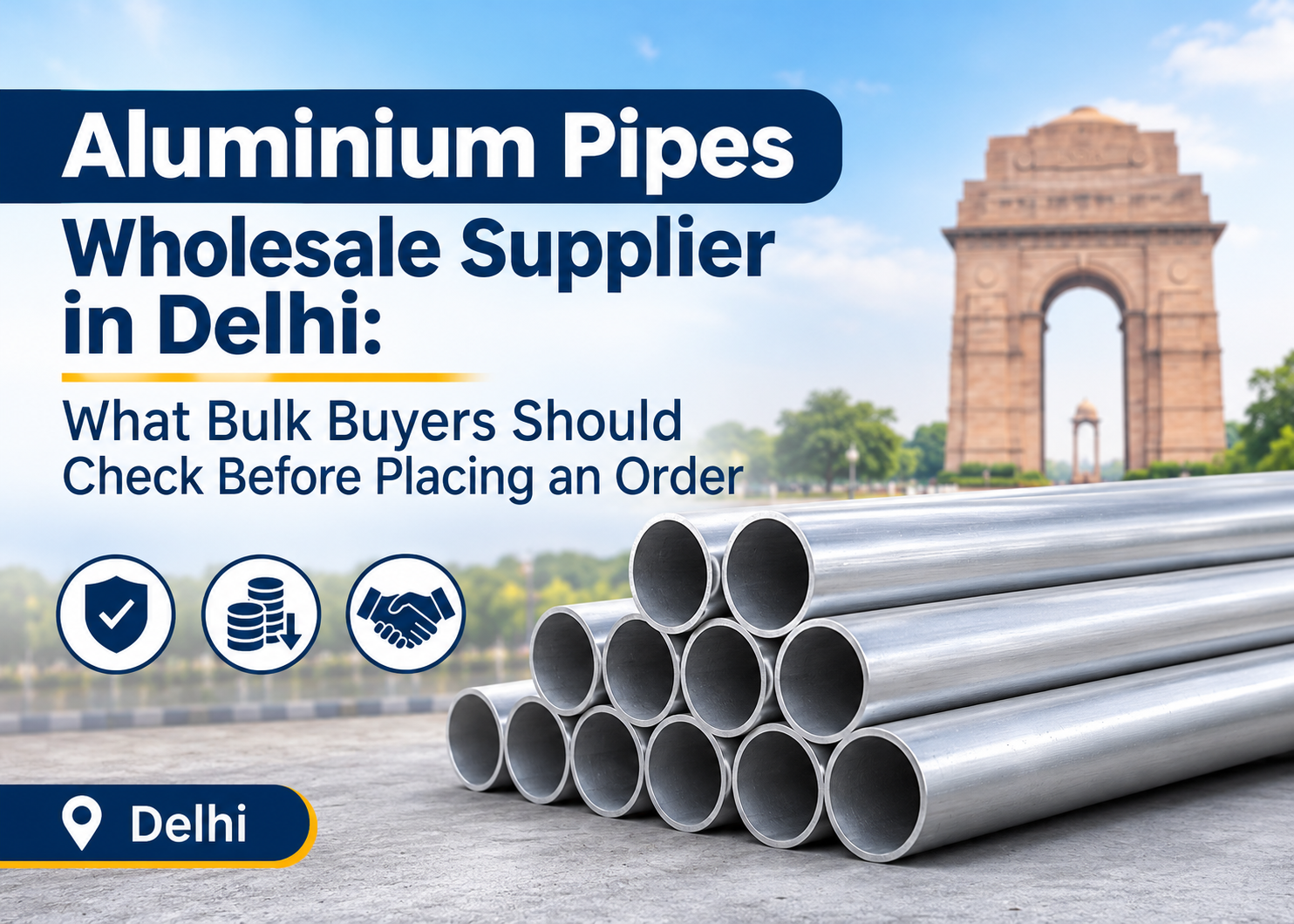
That is why choosing the right aluminium pipes wholesale supplier matters as much as choosing the right pipe. This guide covers what buyers in Delhi and across NCR should check before placing a bulk order: grade, size, finish, paperwork and pricing. It is written for fabricators, contractors, manufacturers and dealers who buy regularly and want fewer surprises.
Why So Many Buyers Are Moving to Aluminium Pipes
Aluminium has a density of roughly 2.7 g/cm³, about one-third that of steel. In practice, pipe runs are far easier to carry, lift, cut and install. A two-person crew can handle lengths that would need a hoist in steel.
There is more to it than weight:
- Corrosion resistance: Aluminium forms a thin natural oxide layer, so it handles humidity and outdoor exposure well. That suits Delhi’s dry summers and monsoon moisture.
- Easy to work with: It cuts, bends, drills and machines without much trouble.
- Low maintenance: You don’t need regular repainting just to keep rust away.
- Good strength-to-weight ratio: It is not as strong as steel in absolute terms, but it is very efficient for its weight.
These are the reasons bulk aluminium pipes show up in fabrication workshops, architectural work, display systems and general engineering jobs.
Round, Square or Rectangular: Pick the Shape for the Job
Most enquiries start with shape, so let’s begin there.
Round aluminium pipes are the everyday choice for handrails, frames, support posts and tubular structures. The shape spreads stress evenly and looks clean when left exposed.
Square and rectangular aluminium pipes are preferred when you need flat faces for joining, mounting or cladding. Partition frames, shutter structures, machine guards and shelving usually lean this way. Rectangular sections also give extra stiffness in one direction.
A quick tip: think about how the pipe will be joined. Flat faces make clamping, bolting and welding easier. Curved surfaces look neater but need more careful fitting.
Grade and Temper: The Detail Most Buyers Skip
This part causes the most mix-ups. Aluminium pipes come in different alloys, and each behaves differently:
- 6063 is the most common choice for architectural and general fabrication. It has a good surface finish and takes anodising well.
- 6061 offers higher strength and is often chosen for structural, load-bearing work.
- 6082 is another strong option for structural use, depending on availability.
Then there is temper, shown as T5, T6 and so on. It tells you how the material was heat-treated, and it changes strength and workability noticeably. A 6063-T5 pipe and a 6061-T6 pipe are not interchangeable just because both are “aluminium pipes”.
When you request a quote, mention the alloy and temper if your drawing specifies them. If you are unsure, tell the supplier what the pipe will be used for. A good supplier will help you narrow it down instead of quoting the cheapest option.
Also ask which standard the material follows. For general engineering in India, buyers commonly refer to IS 733 (bars, rods, tubes and sections) and IS 1285 (extruded round tubes and hollow sections). Confirm whatever your project requires in writing before you order.
Understanding Aluminium Pipe Sizes (and Why Wall Thickness Matters Most)
When buyers talk about aluminium pipe sizes, they usually mention diameter first. But wall thickness decides how the pipe actually performs. Specify these every time:
- Outside diameter (OD) for round pipes, or outer width and height for square and rectangular ones
- Wall thickness in millimetres
- Length, since standard lengths vary and cutting to size may be possible
- Tolerance, if your work needs tight fits
A 1 mm difference in wall thickness changes both strength and weight across a full order. Over a few hundred metres, it changes your bill too. Don’t leave thickness as an assumption.
Surface Finish: Mill, Anodised or Powder Coated
Most pipes arrive in mill finish, the plain natural look straight from extrusion. That works for structural use or anything that will be painted later.
If the pipes will be on display, consider anodised or powder-coated finishes. Anodising gives a harder, more durable surface and keeps the metal look. Powder coating offers colour choices. Decide early, because it affects grade selection, and 6063 generally gives the best anodising results.
How Aluminium Pipe Pricing Really Works
Everyone asks about aluminium pipe price per kg, and we’d love to hand over one fixed number. The honest answer is that no single rate exists.
Aluminium is a market-linked metal, so base rates move with global trends. Your final price also depends on:
- Alloy and temper
- Pipe shape, size and wall thickness
- Order quantity
- Finish and any cutting or processing
- Delivery location
If someone quotes a rate without asking for these details, be careful. Either the quote will change later, or the specification wasn’t properly understood. A reliable supplier asks questions first and quotes second.
A Practical Checklist for Choosing an Aluminium Pipes Supplier in Delhi
Delhi has no shortage of metal traders, particularly around Ajmeri Gate and the old city markets. That gives you choice, but you still need a simple way to tell a dependable aluminium pipes supplier in Delhi from a risky one. Ask these questions:
- Can they state the alloy and temper clearly? Vague answers are a red flag.
- Will they provide a mill test certificate when required? For structural work, this is non-negotiable.
- Can you inspect the material? Reputable suppliers are comfortable with this.
- Is stock consistent? Repeat orders shouldn’t cause production delays.
- Do they offer more than one product? If you also need flats, sections or sheets, one source saves coordination time.
- Is the quote clear and itemised? Hidden charges usually show up late.
- Do they understand your use case? The best suppliers ask what you are building, not just how much you need.
We built Ajanta Industries around this idea. We are based at 6, Raghushree Market, Ajmeri Gate, Delhi, and we work with manufacturers, fabricators, contractors and dealers who need dependable aluminium for regular and project-based requirements. Our team would rather spend five minutes understanding your application than send you a pipe that doesn’t suit it.
Common Mistakes Bulk Buyers Make
- Choosing on price alone: The cheapest quote often hides a thinner wall, a different alloy or loose tolerances. Compare like with like.
- Ordering without a clear spec: Even a rough sketch with sizes and end use prevents mix-ups.
- Forgetting joining and finishing: Welding, anodising and bending all influence which alloy and temper you should pick.
- Skipping the sample: For a large order, ask to see a piece first. Checking size, finish and straightness takes two minutes.
- Ignoring wastage: Cutting loss is real, so build in a sensible margin for long runs.
Where Aluminium Pipes Are Used
Demand across Delhi, Noida, Gurugram, Ghaziabad and Faridabad comes from:
- Staircase and balcony railings
- Partition and glass-fitting frames
- Shop fittings, displays and shelving
- Machine guards and support structures
- Lightweight scaffolding and platforms
- Solar mounting frames
- Furniture and exhibition structures
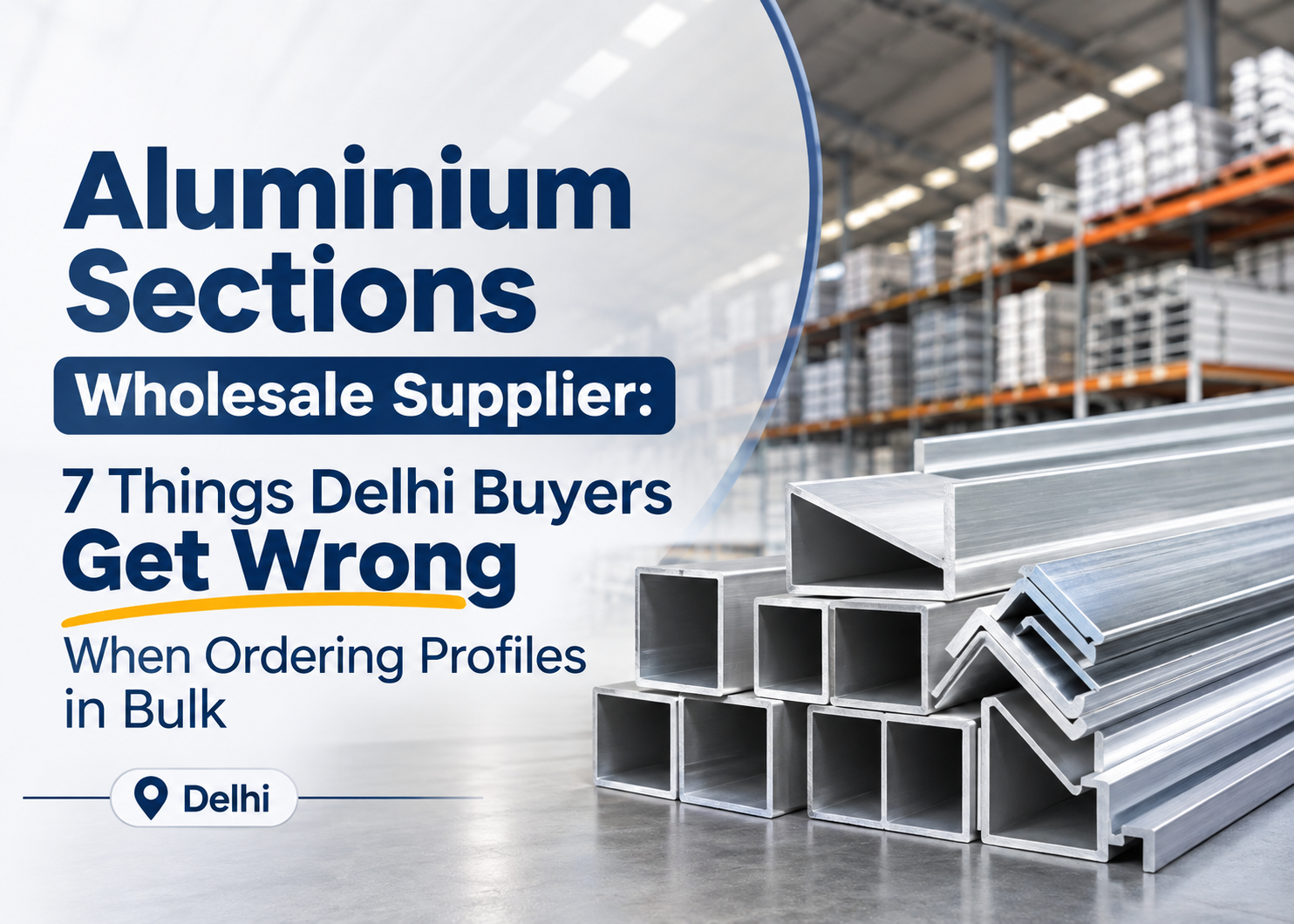
For flat profiles or special shapes, you may also want aluminium sections or aluminium flats, which often work alongside pipes in the same project.
Ready to Source? Here’s What to Send Us
To get an accurate quote from an aluminium pipes wholesale supplier, keep these details ready:
- Pipe shape (round, square or rectangular)
- Size and wall thickness
- Alloy and temper, if specified
- Quantity required
- Finish needed
- Delivery location (Delhi or elsewhere in NCR)
To see the range we work with, visit our aluminium pipes wholesale supplier page. When you are ready, send your requirement through our contact page.
Frequently Asked Questions
What is the minimum order quantity for bulk aluminium pipes?
It depends on size, grade and availability. Share your requirement and our team will confirm what is possible.
Which aluminium grade is best for pipes?
There is no single best grade. 6063 is popular for general fabrication and anodised finishes, while 6061 is commonly chosen where more strength is needed. Your end use should guide the choice.
Do you supply round, square and rectangular aluminium pipes?
Yes. Ajanta Industries deals in all three for fabrication, engineering, structural and commercial use.
Can I get a quote without knowing the exact grade?
Yes. Tell us the end use, size and quantity, and we will help you decide on a suitable grade before quoting.
Do you serve buyers outside Delhi?
We work with business buyers across Delhi NCR. If you are elsewhere, send your enquiry and we will discuss what is feasible.
Final Thoughts
Buying aluminium pipes in bulk doesn’t have to be stressful. When you are clear about shape, grade, wall thickness, finish and quantity, and you work with a supplier who asks the right questions, most problems never show up. The best purchases tend to be the boring ones, where the right material arrives on time and does exactly what it should.
If you are looking for a dependable aluminium pipes wholesale supplier in Delhi, share your requirement with Ajanta Industries and let’s work through it together.