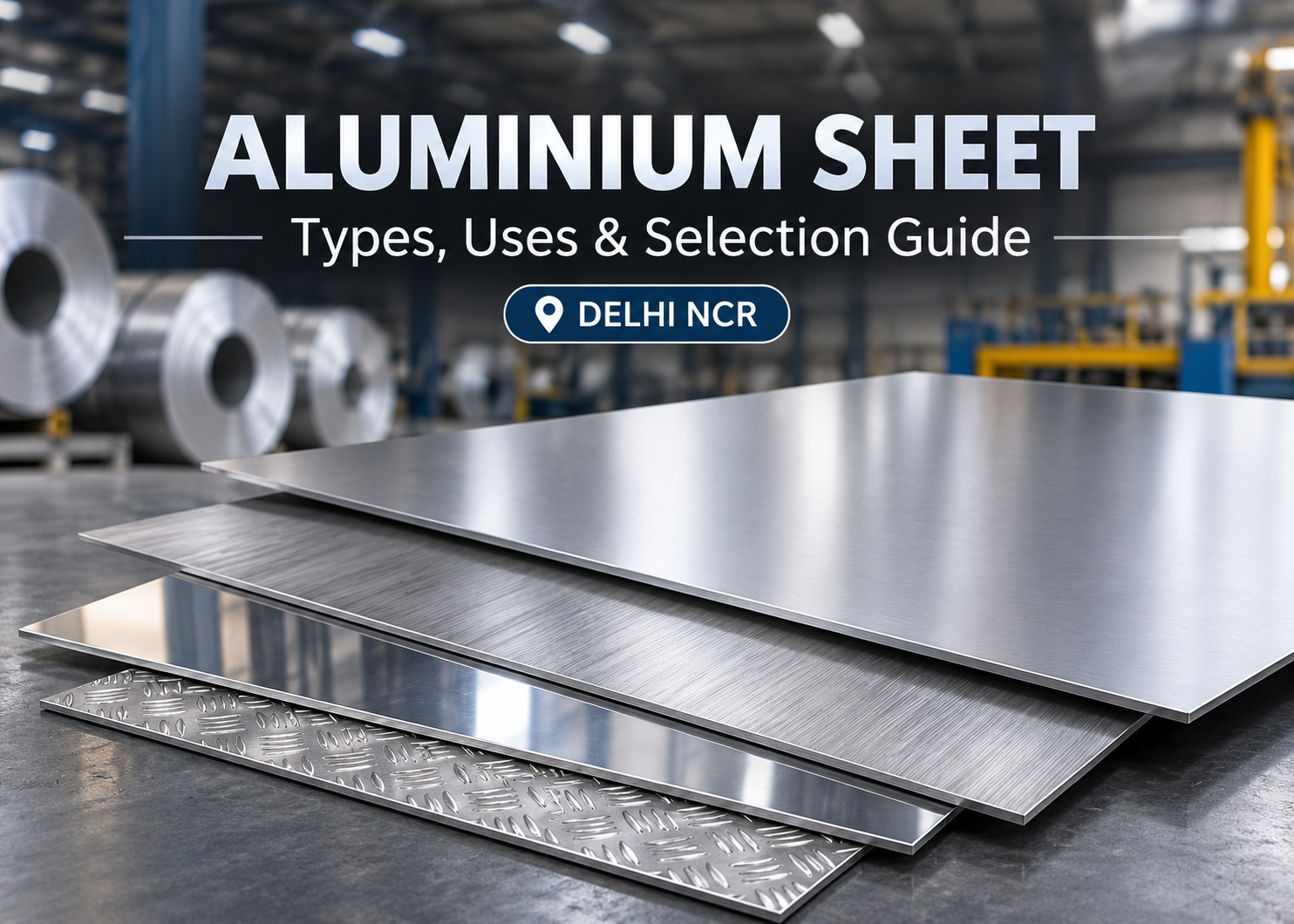
Ask three people on a shop floor what an aluminium sheet is and you may get three slightly different answers. One thinks of a thin roofing or cladding panel. Another pictures the chequered sheet on a platform. A third is thinking of a thicker piece that gets machined into a part.
They’re all talking about the same material family, but not the same product. That gap in understanding is where many ordering mistakes begin.
This guide gets the basics straight: what counts as a sheet, where aluminium sheets are used, how to match one to your job, and a few handling habits that protect the material. If you want the bulk buying checklist (alloy, temper, tolerance, price factors), we’ve covered it separately in our spec checklist for aluminium sheets. Think of this guide as the step before that one.
What Is an Aluminium Sheet?
An aluminium sheet is a flat, rolled product of uniform thickness, supplied in cut lengths and widths. It is thin enough to be cut, bent and formed in a fabrication workshop.
A few neighbouring terms often get mixed up with it:
- Aluminium plate is the thicker version. As a general convention, material thicker than about 6 mm is called plate, though not everyone uses the words strictly. Always state thickness in mm instead of relying on the label.
- Aluminium foil is the very thin end of the range.
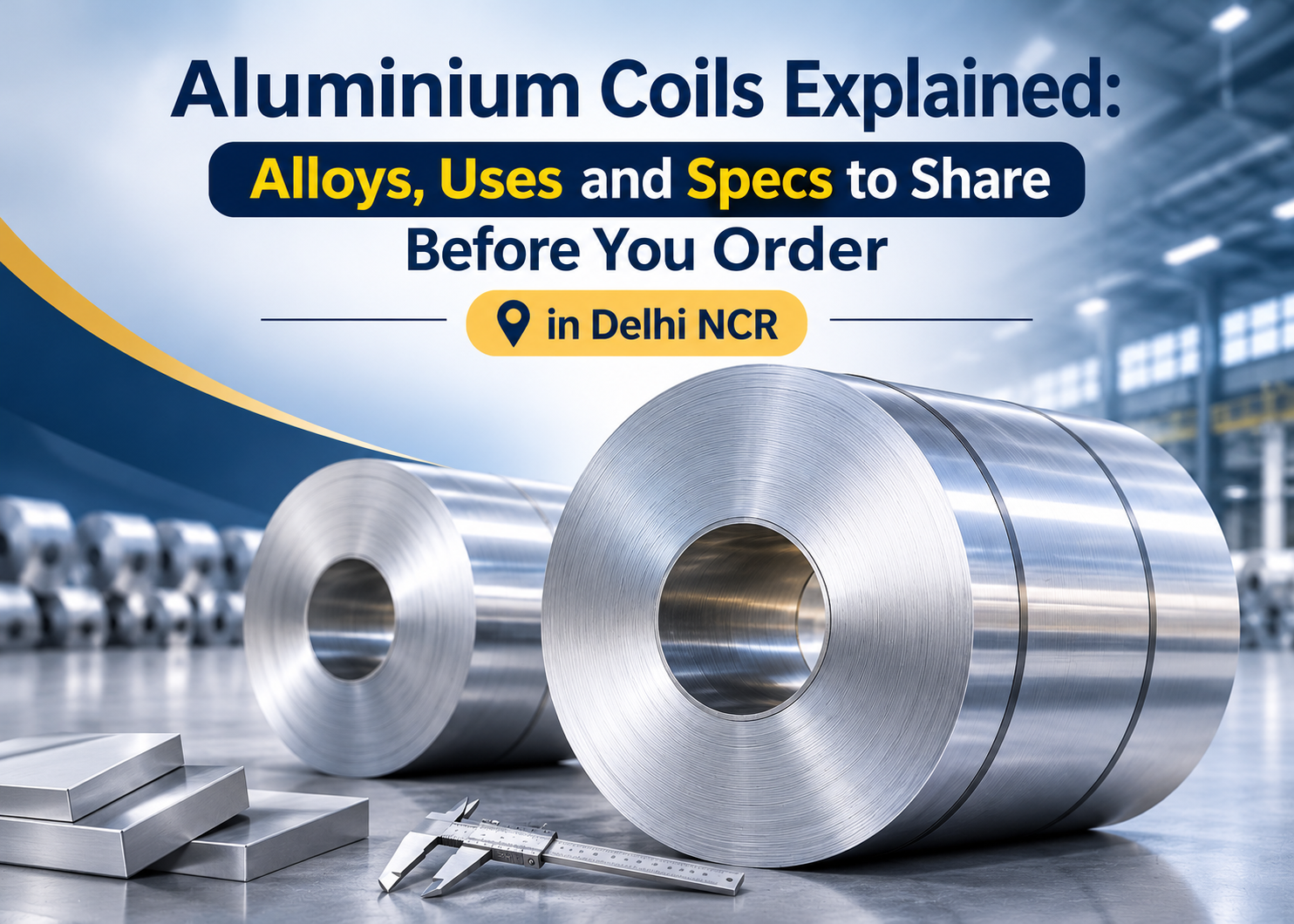
- Aluminium coil is the same kind of rolled metal, supplied as a wound roll instead of flat cut pieces. You can see our range on the aluminium coils page.
If a quotation just says “sheet” with no thickness, treat it as incomplete.
Why Aluminium Sheet Is a Common Choice
A few properties explain why aluminium sheet is used so widely:
- Light weight. Aluminium is roughly one-third the weight of steel, which makes handling and installation easier.
- Corrosion resistance. It forms a thin natural oxide layer on its surface that protects the metal underneath.
- Good strength-to-weight ratio. You get useful strength without the extra weight.
- Easy to work. It can be cut, bent, drilled and welded, depending on the alloy and temper.
- Low maintenance. Most applications need little more than occasional cleaning.
That said, not every sheet behaves the same way. A soft, highly formable sheet and a harder, structural one are very different materials, even if they look alike on the pallet.
Common Aluminium Sheet Uses
Typical aluminium sheet uses include:
- Roofing and cladding. Weather resistance and a clean surface matter most here.
- Panels and enclosures. These need good bending behaviour and consistent flatness.
- Ducting and tanks. Corrosion resistance and formability or weldability drive the choice.
- Signage. A smooth, flat surface and a good finish matter.
- Flooring and platforms. This is where the chequered aluminium sheet comes in. Its raised pattern gives an anti-slip surface.
- General fabrication and manufacturing. Brackets, covers, parts and fabricated components of many kinds.
Notice that each use cares about something different. Cladding cares about surface and weather. Enclosures care about formability. Platforms care about grip. That’s why “which sheet is best?” is the wrong question. “Best for what?” is the right one.
Matching the Sheet to the Job
Here’s a simple way to think about it before you speak to any supplier:
| If your job involves… | Focus on… |
|---|---|
| Heavy bending or forming | A more formable alloy and a softer temper |
| Outdoor exposure | A corrosion-resistant alloy and a suitable finish or coating |
| Visible, finished surfaces | Surface quality and protective film |
| Anti-slip flooring | Chequered pattern and enough aluminium sheet thickness for the load |
| Welded tanks or structures | A weldable alloy, confirmed before ordering |
| Machined or structural parts | A stronger, heat-treatable alloy |
As a rough guide, the 1xxx and 3xxx series are known for formability, the 5xxx series for strength with corrosion resistance, and the 6xxx series for structural and machined work. The exact grade should always be confirmed against your drawing or end use.
On aluminium sheet thickness, think about stiffness as well as strength. A thin sheet can be strong enough and still flex across a large unsupported span. If a panel will sit unsupported, either go thicker or add a stiffening bend or frame.
Working With Aluminium Sheet: Practical Tips
- Mind the bend radius. Harder tempers can crack if bent too tightly. If your design has sharp bends, mention it when you place the enquiry so the right temper is chosen.
- Use tools meant for aluminium. The metal is soft, and the wrong tooling can leave poor edges.
- Watch your fasteners. Steel fasteners in contact with aluminium in damp conditions can cause galvanic corrosion. Compatible or isolated fasteners avoid the problem.
- Keep the protective film on until the job is nearly finished, especially on visible surfaces.
Storage and Handling Mistakes to Avoid
Material can be spoiled before it reaches the machine. Watch for three things:
- Moisture between stacked sheets. Trapped water can leave stains that are hard to remove. Store sheets dry and off the floor.
- Dragging sheets across each other. Lift them, or keep film or paper between them.
- Mixed stacks. Label and separate different alloys and thicknesses so the wrong sheet never reaches the press.
Sourcing Aluminium Sheet in Delhi NCR
Once you know your use, thickness and finish, the supplier conversation gets much simpler. You can share specific details and receive a specific answer.
Ajanta Industries is based at 6, Raghushree Market, Ajmeri Gate, Delhi-110006. We supply aluminium sheets, along with rods, flats, pipes, sections, strips and coils, to manufacturers, fabricators, contractors, dealers and commercial buyers. If you’re comparing an aluminium sheet supplier in Delhi, it helps to be able to discuss several products with one source. You can see the range on our aluminium sheets page. If your project also needs aluminium flats, aluminium sections or aluminium strips, you can enquire about those together.
For an accurate quote, send the product type, thickness, alloy and temper (or the end use, if you’re unsure), size and quantity through our contact page. Pricing depends on the product, specification and quantity.
Frequently Asked Questions
1. What is the difference between an aluminium sheet and an aluminium plate?
Mainly thickness. Thinner material (generally under about 6 mm) is usually called sheet, and thicker material is called plate. Since the terms are used loosely, always confirm the exact thickness in mm.
2. Does an aluminium sheet rust?
Not the way iron or steel does. Aluminium forms a protective oxide layer, so it resists rust. It can still corrode or stain in some conditions, such as trapped moisture or contact with incompatible metals.
3. Which aluminium sheet is used for outdoor work?
Corrosion-resistant alloys such as 3003 and 5052 are common choices, and a coating or finish can add protection. The right pick depends on the strength and appearance you need.
4. Can I get a chequered aluminium sheet?
Chequered sheets are a standard sheet type for anti-slip surfaces. Share the thickness, pattern and quantity you need, and ask your supplier to confirm availability before ordering.
5. How is aluminium sheet price decided?
It depends on alloy, temper, thickness, size, finish and quantity. Compare quotes only for the same specification. Our sheet buying checklist explains this in detail.
6. How can I contact Ajanta Industries?
You can call 9999355566, 9313102300 or 9717181173, email pawan_ajanta@yahoo.com, or visit us at Ajmeri Gate, Delhi-110006.