Two quotes land on your desk. One says ₹3 per kg cheaper. The other costs a little more. Most people pick the cheaper one without a second thought.
Then production starts. The thinner-than-expected sheets need extra passes, the rods come out slightly off-size and the offcuts pile up. Suddenly that “cheaper” lot isn’t cheaper anymore.
We see this often at Ajmeri Gate. That’s why this guide looks at aluminium raw material wholesale from a different angle than the usual “find a supplier” advice. It’s about understanding what you actually pay for once the metal reaches your workshop.
What “Aluminium Raw Material” Really Means for a Buyer
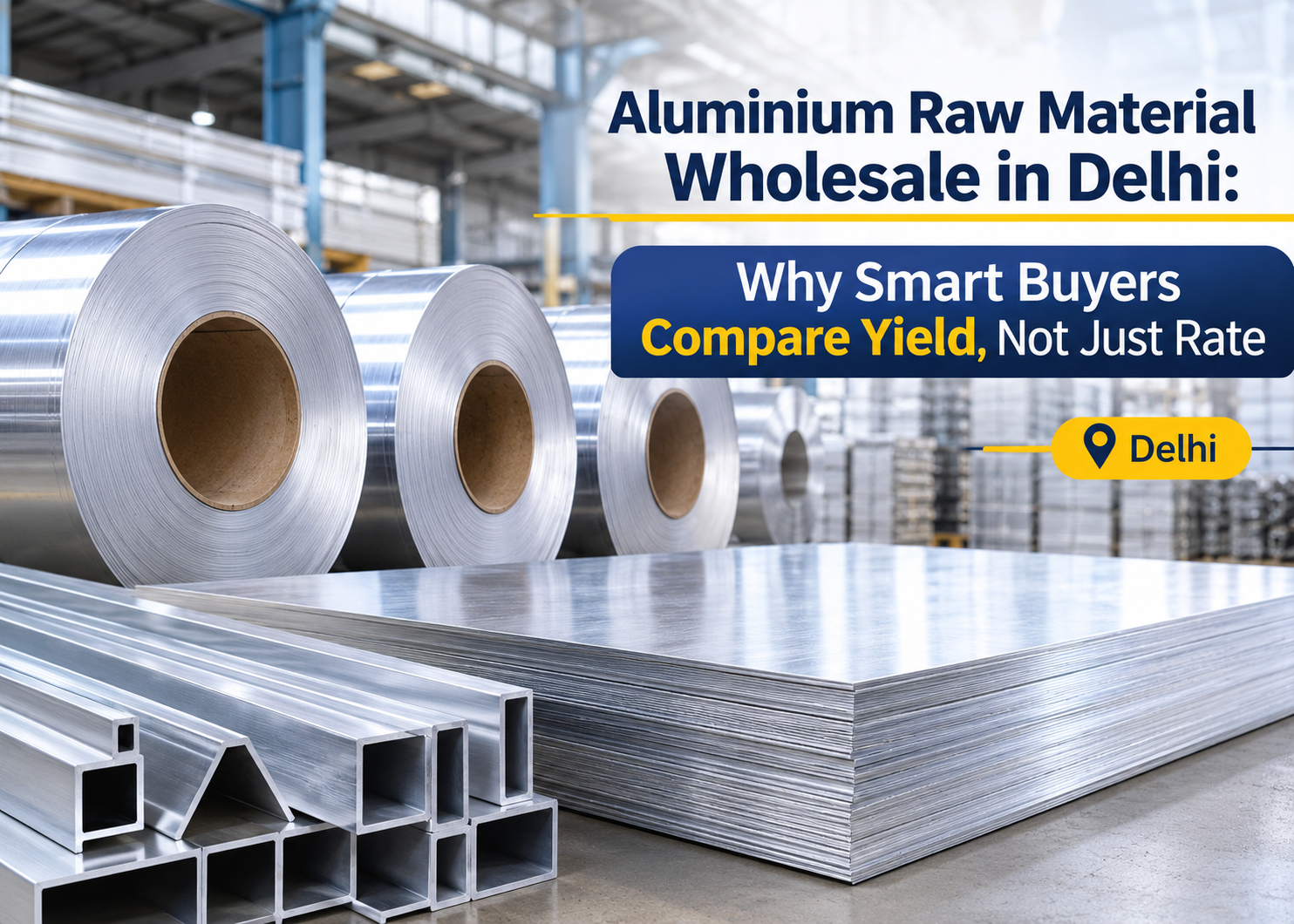
In trade, aluminium raw material usually means semi-finished forms that a factory or workshop converts into something else. Think aluminium rods, flats, pipes, sheets, sections, strips and coils. You cut them, machine them, bend them, weld them or roll them into your final product.
That matters because you’re not buying metal by the kilo for its own sake. You’re buying usable metal. Whatever is left after cutting, trimming and rejecting is the number that decides your real cost.
The Real Price Drivers Behind Bulk Aluminium
Aluminium is a market-linked metal. Global benchmark prices (the LME, for example), exchange rates, import costs and local demand all feed into what you pay in India. A few things move your rate in any bulk aluminium order:
- Alloy and temper. A 6061 bar and a 1100 sheet are priced differently because they behave differently.
- Size and thickness. Unusual dimensions or tight tolerances cost more than standard ones.
- Quantity. Larger volumes usually earn better terms, but only if you can store and use them.
- Processing. Cutting, slitting or special finishing adds to the rate.
- Timing. Rates can shift from week to week, so a quote has a shelf life.
Because of this, any honest aluminium raw material supplier in Delhi will tell you a rate is valid for a short window, not forever.
The Yield Test: A Simple Way to Compare Two Quotes
Here’s a habit worth building. Before you decide, ask yourself three questions:
- How much of this material will I actually use? If you cut parts from a 1,000 mm length and the part is 320 mm, you get three pieces and 40 mm of waste. A different stock length might give you zero waste.
- Will the thickness hold within tolerance? A sheet that runs slightly thin can fail a fit or finish check.
- Will it need rework? A rough surface or uneven temper can mean extra processing time.
A slightly higher rate on the right size and grade often wins on total cost. That’s what we mean by buying on yield.
Match the Form to the Job
Choosing the wrong form is the quietest way to lose money. Here’s a quick guide to the forms we handle at Ajanta Industries:
| Form | Commonly used for |
|---|---|
| Aluminium rods | Machining, turned parts, engineering components |
| Aluminium flats | Frames, brackets, busbars, trims |
| Aluminium pipes | Railings, structural and commercial work |
| Aluminium sheets | Enclosures, cladding, panels |
| Aluminium sections | Windows, partitions, architectural frames |
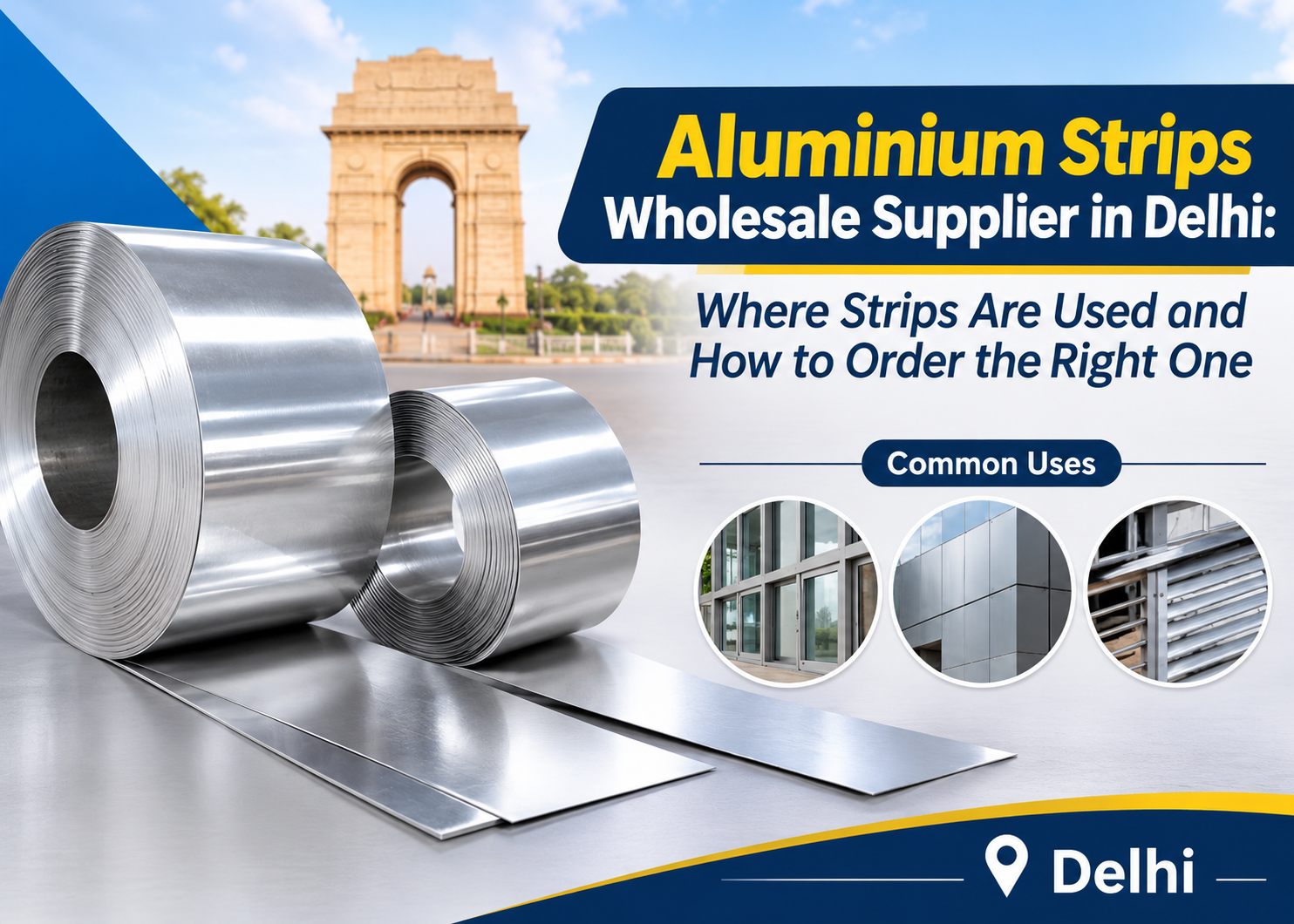
| Aluminium strips | Bending, punching, electrical parts |
| Aluminium coils | Roll forming, slitting, large-volume runs |
If you want more detail on any of these, our guides on aluminium rods, aluminium flats and aluminium sheets go deeper.
Alloy Choice: A Short, Practical Primer
“Aluminium” is really a family of alloys. A rough guide:
- 6061 is a common choice when strength and machinability matter.
- 6063 is popular for architectural sections and anodised finishes.
- 1100 and 3003 suit work that needs easy forming.
- 5052 is often picked where corrosion resistance and bending matter.
This is general guidance, not a substitute for your drawing or your client’s specification. Always confirm alloy and temper in writing before you order.
Plan Your Purchase, Don’t Just React to It
Many workshops buy only when stock runs out. That’s stressful and usually expensive. A little planning changes things:
- Track your monthly consumption by form and size. Even a simple sheet of paper helps.
- Keep a small buffer of your fastest-moving sizes.
- Phase large orders if storage is tight, rather than stacking material you won’t touch for weeks.
- Ask about repeat supply. Consistent stock means consistent finish and thickness from one order to the next.
Why Location Helps: Sourcing from Delhi NCR
Being near your supplier is a real advantage. You can check stock in person, compare a sample against your drawing and arrange a quick pickup when a job runs short.
Delhi’s metal trade has long been centred around Ajmeri Gate, and that’s where Ajanta Industries operates, at Raghushree Market. Buyers from Delhi, Gurugram, Noida, Faridabad and Ghaziabad often combine a visit here with other trade errands. If your site is outside NCR, share your location upfront so delivery can be discussed realistically.
Paperwork Worth Asking For
For regular production, a few documents can save you trouble later:
- An itemised quote showing size, thickness, grade, quantity and rate.
- A test certificate if your client or inspector requires one.
- Clear delivery timelines, especially for project work.
Mention these before ordering, not after delivery.
How to Request an Aluminium Raw Material Wholesale Quote
Send these details together and you’ll usually get a useful answer the first time:
- Product form (rod, flat, pipe, sheet, section, strip or coil)
- Size, thickness and length
- Alloy and temper, or the end use if you’re unsure
- Quantity, and whether it’s one-time or recurring
- Delivery location
You can browse the full aluminium products range and then share your requirement on the contact page.
Frequently Asked Questions
What is aluminium raw material wholesale?
It means buying aluminium in semi-finished forms, such as rods, sheets and sections, in volume for manufacturing, fabrication or resale.
Why do aluminium rates change so often?
Aluminium is linked to global market prices, currency movements and local demand. Rates can vary with alloy, size and quantity too.
How do I know which alloy to choose?
Start with the end use: machining, bending, welding or structural work. If you’re unsure, describe your application and your supplier can help narrow it down.
Can I buy different forms in one order?
Yes. Combining forms such as sheets, strips and sections in a single order is common, and it often simplifies billing and delivery.
Do you supply outside Delhi?
Business buyers across Delhi NCR are the main focus. If you’re elsewhere, send your details and ask what’s feasible.
Final Thoughts
The cheapest quote isn’t always the lowest cost. Look at yield, confirm the alloy, plan your purchases and get everything in writing. Do that, and your aluminium raw material wholesale buying becomes calmer and more predictable.
If you’re sourcing in Delhi NCR, share your requirement with Ajanta Industries, and our team will help you take it from there.